
Business Credit Approval Tips for Beginners
Learn easy business credit approval steps to get approved for business credit cards and loans. Simple tips every US small business owner needs to know.
Russel
6/7/20268 min read
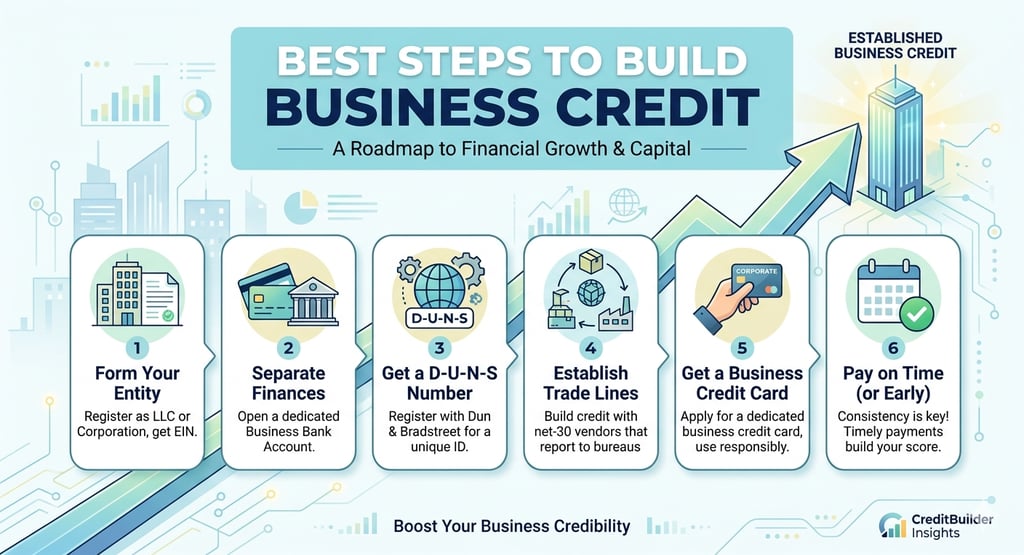
Getting approved for business credit is not easy when you are just starting out.
Most small business owners apply without preparing. They get denied. Then they wonder what went wrong.
The truth is, lenders and credit issuers look for specific things before they approve you. If those things are not in place, approval becomes very hard — no matter how solid your business idea is.
This guide breaks down the most important business credit approval tips for beginners. Simple, practical steps that help you build a strong foundation, improve your chances, and start accessing the funding your business needs.
Let's get into it.
Why Most Beginners Get Denied for Business Credit
Before we talk about what works, it helps to understand why most beginners fail.
Here is what usually happens:
A business owner applies for a business credit card using a personal credit score that is not strong enough
There is no separate business identity set up — no EIN, no business address, no business phone
The business has no credit history under its own name
Lenders cannot verify the business as a real, established entity
When lenders cannot confirm your business is legitimate and financially stable, they either deny the application or offer very low limits.
The fix is not complicated. But it does take some upfront preparation.
Step 1: Set Up Your Business as a Separate Legal Entity
This is the first and most important step for any beginner.
Your business needs to exist as its own legal identity — separate from you as a person. That means:
Form an LLC or corporation. A sole proprietorship is not enough for building real business credit. An LLC gives your business legal separation from your personal finances.
Get an EIN (Employer Identification Number). This is a tax ID for your business, issued by the IRS. It works like a Social Security number, but for your business. Many lenders require an EIN before approving business credit. You can apply for one free at IRS.gov.
Set up a dedicated business address and phone number. Use a real business address, not just your home. A registered agent address or virtual office address works. Get a business phone number that is listed and consistent across all platforms.
Why does this matter for approval? Lenders verify your business before approving credit. If they cannot find a consistent business name, address, and phone number, it raises red flags.
Step 2: Open a Business Bank Account and Keep It Active
A business bank account is one of the simplest business credit requirements for loan approval — yet many beginners skip it.
Lenders want to see that your business handles money responsibly. A business bank account shows:
Your business is operating
You have cash flow coming in
You are managing finances separately from personal expenses
Open a business checking account in your company name using your EIN. Keep it active. Deposit revenue regularly. Avoid overdrafts. Some lenders will ask for 3 to 6 months of business bank statements when you apply for funding or a loan.
A healthy bank account strengthens your application significantly.
Step 3: Register With the Business Credit Bureaus
Here is something most beginners do not know: business credit is tracked separately from personal credit.
The three main business credit bureaus are:
Dun & Bradstreet (D&B) — One of the most widely used by lenders. You need a DUNS Number to have a D&B credit profile. Register at Dnb.com for free.
Experian Business — Tracks business credit history and generates business credit scores.
Equifax Business — Used by many banks and lenders to verify business creditworthiness.
If your business is not registered with these bureaus, you have no business credit score. And with no score, lenders have nothing to evaluate.
Register with Dun & Bradstreet first. Get your DUNS Number. Then start building your credit history so these bureaus can begin reporting your activity.
Step 4: Open Vendor Accounts That Report to Business Bureaus
This is one of the most effective easy business credit approval steps available to beginners.
Vendor accounts — also called net-30 accounts or trade lines — allow you to purchase products or services now and pay within 30 days. Many of these vendors report your payment history to business credit bureaus.
When you pay on time, your business credit score grows.
Some beginner-friendly vendors that report to business bureaus include:
Uline (shipping and packaging supplies)
Quill (office supplies)
Grainger (industrial and safety products)
Crown Office Supplies
You do not need strong credit to get approved for most of these accounts. That is the point. They are designed to help businesses start building credit history from scratch.
Open 3 to 5 vendor accounts. Buy small amounts. Pay on time every month. Within 60 to 90 days, your business credit profile starts taking shape.
Step 5: Apply for a Business Credit Card the Right Way
Once you have your EIN, business bank account, and some vendor account history, you are ready to apply for a business credit card.
Here is how to get approved for business credit cards as a beginner:
Start with secured or beginner-friendly options. Some business credit cards are specifically designed for new businesses or owners with limited credit history. These are easier to get approved for and help you build credit fast.
Use your EIN when possible. Some cards allow you to apply without a personal Social Security number, using only your EIN. This keeps business and personal credit completely separate.
Do not apply for too many cards at once. Every application creates a hard inquiry. Multiple hard inquiries in a short period can hurt both your personal and business credit. Apply for one card, use it responsibly, then apply for the next one later.
Keep your credit utilization low. Credit utilization means how much of your credit limit you are using. Try to keep it under 30%. If your card has a $5,000 limit, keep the balance under $1,500. This shows lenders you are not dependent on credit to survive.
Pay in full every month. Carrying a balance costs you interest and raises your utilization rate. Paying in full each month builds your score faster and keeps costs low.
Step 6: Monitor Your Business Credit Score Regularly
A lot of beginners apply for credit without ever checking their business credit score first.
That is a mistake.
Check your business credit profile on Dun & Bradstreet, Experian Business, and Equifax Business at least once every few months. Look for:
Errors or wrong information
Accounts that should be reporting but are not
Negative items that need to be addressed
Errors on business credit reports are more common than you think. A wrong address, an incorrectly reported late payment, or a duplicate account can lower your score and hurt your approval chances.
Dispute errors immediately. Keep your business information consistent and updated across all platforms.
Step 7: Build Strong Fundability Before Applying for Loans
Fundability is a term used in the business credit world that simply means: how ready is your business to receive funding?
Lenders look at more than just your credit score. Before approving a business loan or line of credit, many lenders check:
How long your business has been operating (time in business)
Your annual revenue and monthly cash flow
Whether your business has an active website, business email, and professional presence
Your business credit score across the major bureaus
Your personal credit score (especially for newer businesses)
Simple steps for business credit approval that improve fundability include:
Having a professional website with your business name, EIN, address, and phone number clearly listed
Using a business email address (not Gmail or Yahoo)
Maintaining consistent business information across Google, Yelp, LinkedIn, and other directories
Having your business listed on Google Maps and major business directories
The more real and established your business looks, the better your chances of approval.
Step 8: Understand What Lenders Actually Look For
When you apply for a business loan or line of credit, lenders evaluate what is often called the "Five Cs of Credit":
Capacity — Can your business generate enough revenue to repay the loan?
Capital — Do you have business assets or savings if things go wrong?
Collateral — Do you have anything to secure the loan with?
Conditions — What is the loan for and does your industry show stable demand?
Credit — What does your business credit history say about how you manage debt?
As a beginner, you may not have all five in perfect shape. That is okay. But understanding these factors helps you figure out where your weaknesses are and how to fix them before you apply.
Many new business owners focus only on credit score. But lenders look at the full picture.
How Long Does It Take to Build Business Credit?
This is one of the most common questions beginners ask.
The honest answer: it takes time, but not as long as personal credit.
With consistent effort — paying vendor accounts on time, keeping utilization low, maintaining accurate business information — you can build a solid business credit profile in 6 to 12 months.
Some businesses start seeing real results in 90 days if they follow the steps consistently.
The key is to start now. Every month you wait is a month your business credit history is not growing.
Common Mistakes Beginners Make (And How to Avoid Them)
Here are mistakes that slow down the credit building process:
Mixing personal and business finances. Keep them completely separate. Always.
Applying for credit before setting up the business properly. Get your EIN, bank account, and vendor accounts in place first.
Ignoring business credit bureaus. If you are not registered, you are not building a score.
Paying late. Even one late payment can damage your business credit score significantly.
Not monitoring your credit profile. Errors happen. Check regularly.
Avoiding these mistakes can save you months of setbacks.
FAQ: Business Credit Approval Tips for Beginners
Q: What is the minimum credit score needed to get approved for business credit? There is no universal minimum. It depends on the lender and the product. Some vendor accounts require no credit check at all. Business credit cards may require a personal credit score of 640 or higher. SBA loans typically require 680+. The stronger your business credit profile, the less your personal score matters over time.
Q: Can I build business credit without using my personal Social Security number? Yes, in many cases. Some vendors and credit products allow you to apply using only your EIN. However, most business credit cards and loans will do a personal credit check for new businesses with limited history.
Q: How many vendor accounts do I need to build a business credit score? Most business credit experts recommend starting with 3 to 5 vendor accounts that report to the major bureaus. This gives you enough payment history to generate a score and start improving it over time.
Q: Does forming an LLC automatically build my business credit? No. Forming an LLC creates the legal foundation, but it does not automatically generate a business credit profile. You need to actively open accounts, make payments, and register with the credit bureaus for your score to grow.
Q: Can a brand new business with no revenue get approved for business credit? Yes, for certain starter products like vendor accounts and secured business credit cards. For larger loans or unsecured lines of credit, lenders typically want to see at least 6 months of business activity and some revenue history.
Conclusion: Start Building Business Credit the Right Way
Business credit approval does not happen by accident.
It happens when your business is set up correctly, your credit history is growing, and lenders can see that your business is real, stable, and financially responsible.
The simple steps for business credit approval come down to this: set up your legal structure, open the right accounts, pay on time, and stay consistent.
You do not need perfect credit to start. You just need to start.
If you want help building your business credit from the ground up — or if you are ready to explore funding options for your business — Altopex.com can guide you through every step. We work with US small business owners to build strong credit profiles and connect them with the right funding at the right time.
Reach out today and let's build your business credit the right way.
Published by Altopex.com | US Business Credit & Funding Consulting