
How Marcus Allen Got $200K in Business Funding Without Using His Personal Credit
Marcus Allen was running a small landscaping company in Atlanta, Georgia. He had been in business for about two years. Good clients. Steady work. A small crew of five people. But every time he needed to grow — buy better equipment, hire more workers, take on bigger contracts — he hit the same wall.
Russell
6/9/20264 min read
No business credit. No funding. No way forward.
His personal credit score was around 620. Not terrible. But not strong enough to get the kind of business loan he actually needed. Most lenders turned him down. The ones who didn't offered him high-interest personal loans that put his personal finances at risk.
He was stuck. And he knew it.
The Real Problem Marcus Had
Marcus made a mistake most small business owners make.
He ran everything through his personal name. Personal bank account. Personal credit card. No EIN credit. No business credit profile. As far as lenders were concerned, his business didn't really exist on paper.
When a lender looks at your business, they want to see a separate credit identity — something built under your business's EIN (Employer Identification Number). Think of your EIN like your business's social security number. It should have its own credit history, its own payment record, its own score.
Marcus had none of that. So no lender took him seriously.
He found Altopex in early 2024 after searching for ways to get business funding without using his SSN. That's when things started to change.
Step 1 — Getting the Business Foundation Right
The first thing we looked at was his business structure.
Marcus had an LLC, which was good. But his business address was a home address. His phone number was a personal cell. He had no separate business bank account open long enough to matter. And he wasn't listed in 411 business directories.
These things sound small. But lenders check them. If your business doesn't look legitimate on paper, they won't fund it. Period.
We helped Marcus:
Update his business address to a proper registered address
Get a dedicated business phone line
Open a business checking account and keep a consistent balance
Register his business with DUNS, Experian Business, and Equifax Business
This process took about 3 to 4 weeks. But it was the foundation everything else was built on.
Step 2 — Building Business Credit With Vendor Accounts
Most business owners don't know about starter vendor accounts.
These are companies that give you net-30 or net-60 payment terms — meaning you buy something now and pay in 30 or 60 days. When you pay on time, they report that payment history to the business credit bureaus.
This is how you build business credit from zero. No personal credit check in most cases.
We helped Marcus open accounts with three starter vendors that reported to Dun & Bradstreet. He ordered small supplies he needed for his business anyway — gloves, safety gear, cleaning products. He paid every invoice on time.
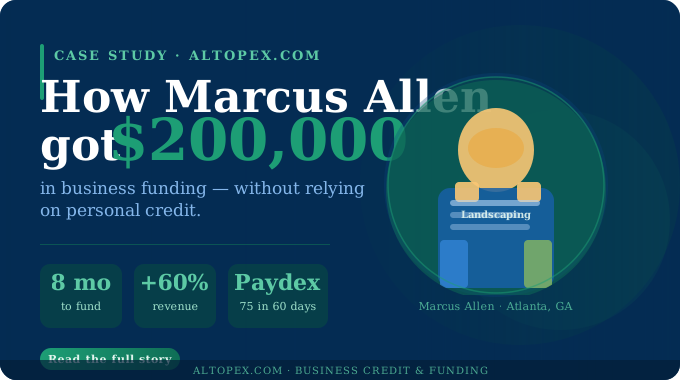
Within 60 days, Marcus had a Paydex score. That's Dun & Bradstreet's business credit score. He went from nothing to a 75 Paydex in about two months.
That number opened the next door.
Step 3 — Business Credit Cards Under His EIN
Once Marcus had a basic business credit profile, we helped him apply for business credit cards that report to business credit bureaus — not his personal credit.
He got approved for two business credit cards with a combined limit of around $18,000. He used them for business expenses only and paid them down consistently every month. His credit utilization — that's how much of your available credit you're using — stayed below 20%.
Low utilization plus on-time payments meant his business credit profile kept growing stronger every month.
Step 4 — Working Capital Loan and Line of Credit
By month seven, Marcus had a solid business credit profile. Multiple trade lines reporting. Good payment history. A business bank account showing regular deposits and positive cash flow.
He was now a completely different borrower.
We connected him with lenders who specialize in small business funding. Lenders who look at business credit, cash flow, and time in business — not just personal credit scores.
Marcus was approved for:
$125,000 working capital loan — to buy two new commercial-grade mowers and a pickup truck for his crew
$75,000 business line of credit — a revolving credit line he could draw from as needed for payroll, materials, and seasonal gaps
Total funding: $200,000.
His personal credit was checked, but it wasn't the deciding factor. His business credit profile and cash flow did most of the heavy lifting.
What Changed for Marcus After the Funding
He hired three more people. Took on two large commercial landscaping contracts. Bought the equipment he needed to handle bigger jobs.
In less than 12 months after starting the credit-building process, Marcus's revenue grew by about 60%. He's no longer turning down jobs because he can't afford equipment. He's no longer using personal cards to cover business expenses.
His business now operates as a real financial entity — separate from him personally. That's the goal.
What You Can Learn From Marcus's Story
Marcus didn't have perfect credit. He didn't have a wealthy investor or a family loan. He just followed a clear process.
Build the right foundation. Open vendor accounts. Build business credit under your EIN. Show consistent cash flow. Then go after real funding.
That process works. It takes time — usually six to twelve months to do it properly. But it works.
The biggest mistake most business owners make is waiting too long to start. Every month you delay is a month you're not building the credit history lenders want to see.
FAQ
Can I get business funding without good personal credit? Yes. If you build a strong business credit profile under your EIN, many lenders will focus on your business credit and cash flow rather than your personal score.
How long does it take to build business credit from scratch? Most business owners see real results in 6 to 12 months when they follow the right steps consistently.
What are trade lines in business credit? Trade lines are accounts that report your payment history to business credit bureaus. Vendor accounts, business credit cards, and loans are all examples of trade lines.
Do I need an LLC to build business credit? An LLC or corporation gives your business a separate legal identity, which makes it easier to build credit under your EIN. It's one of the first steps most advisors recommend.
What is a Paydex score? It's the business credit score from Dun & Bradstreet. It goes from 0 to 100. A score of 80 or above is considered strong by most lenders.
If you're in a similar position to Marcus — good business, no business credit, stuck on funding — Altopex can help you build a real plan. We work with small business owners step by step to build business credit and access the funding your business needs to grow. Reach out to us at Altopex.com.